
Need a New Roof? Why Going Solar at the Same Time Saves You Thousands
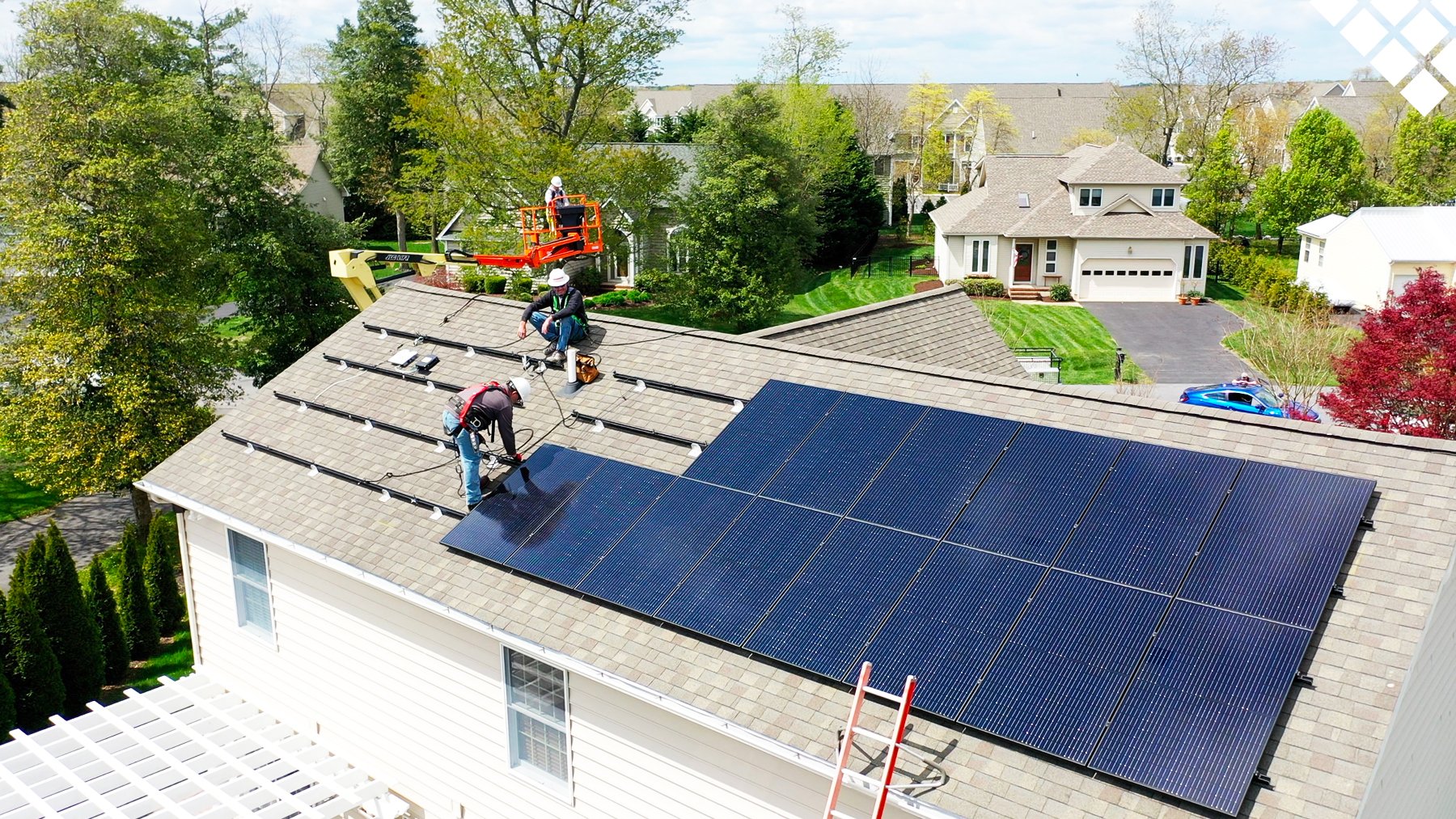
Every week I talk to homeowners who are facing one of the most dreaded conversations in home ownership: "You need a new roof."
Whether the roofer found it on an inspection, a storm tore up shingles, or the age is just finally catching up — the reaction is almost always the same. Frustration, sticker shock, and then the reluctant question: how do I pay for this?
What most of those homeowners don't know — and what I genuinely enjoy being able to tell them — is that if they were already thinking about solar, or open to it, there is a path where the roof essentially gets paid for as part of the solar project. With $0 down. With fixed payments that don't escalate. And with an electric bill that drops dramatically — or disappears entirely — while they're paying it off.
That's not a promotional line. That's the actual math. Let me walk you through it.
What a New Roof Actually Costs in New Jersey and Pennsylvania
Let's start with reality. A roof replacement in New Jersey in 2026 runs anywhere from $8,500 to $25,000+, depending on the size of the home, the pitch and complexity of the roof, and the materials used. For the most common scenario — a 1,700–2,000 square foot home with architectural shingles — most homeowners in our region are looking at $12,000–$18,000, all in, including tear-off, underlayment, flashing, permits, and labor.
In Pennsylvania, the numbers are similar: $10,000–$17,000 for a typical home, with the Philadelphia suburban market at the higher end given local labor rates.
That's a significant chunk of money. And most homeowners don't have $12,000–$18,000 sitting in a savings account tagged for roof emergencies.
How Most People Finance a Roof — And What It Actually Costs
When the roof has to be replaced and cash isn't available, homeowners typically turn to one of a few financing paths. Here's what those paths actually cost in 2026:
Personal / Home Improvement Loan
The fastest option. Funds in 1–3 business days. No collateral required. The catch: interest rates range from 7.99% to 24% APR depending on credit score, with most borrowers landing in the 10–15% range. Typical terms are 5–7 years.
On a $15,000 roof financed at 12% APR over 7 years, you'd pay approximately:
- Monthly payment: ~$265
- Total interest paid: ~$7,260
- Total cost of the roof: ~$22,260
HELOC or Home Equity Loan
Lower interest rates — around 7–10% — but requires equity, takes 2–6 weeks to close, and uses your home as collateral. On a $15,000 roof at 8% over 10 years:
- Monthly payment: ~$182
- Total interest paid: ~$6,840
- Total cost of the roof: ~$21,840
Contractor Financing
Some roofers offer promotional 0% APR periods — but read the fine print. These often come with deferred interest clauses: if you don't pay off the full balance during the promotional window, all the interest that "didn't accrue" gets added to your balance at the original rate, often 25–29%. That $15,000 roof can become a $20,000+ obligation very quickly if the promotion lapses.
In every conventional financing scenario, you pay tens of thousands of dollars for a new roof — and get nothing back for it. The roof protects your home. It does its job. But it generates no income, creates no savings, and adds nothing to your monthly budget except a debt payment and the peace of mind that you're not going to have water in your living room.
The Solar + Roof Path: What Changes
Here's where things get interesting.
When we bundle a roof replacement into a solar installation at Solar 4 Heroes, the entire project — roof and solar together — is financed under a single solar loan structure: $0 down, fixed monthly payment, no escalator. The financing partner covers the full combined cost. You own both the roof and the panels from day one.
The solar loan payment you make each month? It's offset — or fully covered — by the money you're no longer paying to PSE&G, PECO, or JCP&L every month.
Let me put those two paths next to each other with real numbers:
Scenario: NJ homeowner needs a new roof and has been thinking about solar
| Path | Upfront Cost | Monthly Obligation | What You Get Back |
|---|---|---|---|
| Roof only (financed at 12% / 7 yr) | $0 down | ~$265/month — pure debt | Nothing. Roof over your head. |
| Roof + Solar ($0 down loan) | $0 down | Fixed solar payment (~$150–$200 est.) | Electric bill drops to near $0. SREC payments. Home value increases. |
Solar payment estimate based on typical NJ system + roof bundle. Actual payment depends on system size and financing terms — we'll give you exact numbers.
In the roof-only scenario, you're making a $265 monthly payment for seven years and getting nothing except a debt payoff. In the solar + roof scenario, your combined loan payment is often less than your old electric bill was — meaning you're cash-flow neutral or cash-flow positive from month one, while simultaneously paying off both the roof and the solar system.
The roof isn't a cost anymore. It's part of the package that eliminates your utility bill.
The Hidden Cost Nobody Mentions: Removing Panels From an Old Roof
There's another reason the timing of this decision matters enormously — and most homeowners only learn it the hard way.
Solar panels are designed to last 25–30 years. Asphalt shingle roofs in New Jersey and Pennsylvania typically last 20–30 years, depending on material quality, weather exposure, and maintenance.
If you install solar panels on a roof that's already 10–15 years old, you're setting yourself up for a future where you need to tear off that aging roof while a fully functional solar array is sitting on top of it. That's not a minor complication. Before anyone can touch your roof, every panel has to come down. And after the new roof goes in, every panel has to go back up.
Removing and reinstalling a rooftop solar array costs approximately $255–$275 per panel — not including the lost energy production while your system is offline. A typical 16–20 panel system could generate a removal and reinstallation bill of $4,000–$5,500. Sometimes more.
Bundling the roof and solar together eliminates this cost entirely. Both go in at the same time. Both are warrantied for approximately the same lifespan. When both eventually reach end-of-life — 25+ years from now — they come down and go back up together, once.
This alone can save thousands of dollars over the life of the system. It's one of the most overlooked arguments for doing both projects simultaneously, and it's one I always make sure to raise with customers who are on the fence about timing.
The Practical Benefits Nobody Talks About
Beyond the financing math, there are real operational advantages to doing a roof and solar installation together that most homeowners don't think about until they're in the middle of a project:
One Crew. One Permit. One Timeline.
A combined roof and solar project means one set of permits, one scheduling process, one inspection, and one crew on your property for a consolidated period of time. Doing them sequentially means double the permitting delays, double the scheduling hassle, and double the disruption to your household.
Aligned Warranties
Your new roof comes with a manufacturer warranty — typically 25–30 years on quality architectural shingles. Your solar panels come with a 25-year manufacturer performance warranty. When both go in at the same time, your warranties are aligned. No gaps. No scenario where your 10-year-old panels are in perfect shape but your roof warranty has expired.
Proper Flashing and Penetration Work
When solar installers are penetrating a brand-new roof to mount racking hardware, everything is fresh. The flashing is new. The underlayment is intact. The installer can do the job correctly without working around aging materials or pre-existing vulnerabilities. When solar is mounted on an old roof, every penetration carries more risk — and more potential for future leaks if something is slightly off.
One Down Payment of $0
Rather than coming up with $0 down for the roof (on a high-interest loan) and then separately figuring out how to finance solar later, you have a single financing transaction. One approval. One monthly payment. One account to manage.
The NJ and PA Incentive Stack Sweetens It Further
When you bundle a roof replacement with solar in New Jersey, you're not just getting a better financing deal — you're also unlocking the state's solar incentives on the full project:
New Jersey:
- Net metering at full retail rate — every kilowatt-hour your new roof-mounted system produces is credited at the full retail rate your utility charges, currently $0.20–$0.26/kWh
- SREC-II program — you earn $85 per megawatt-hour your system generates for 15 years, paid through an approved aggregator. A typical system generates $800–$1,200 in SREC payments annually
- Sales tax exemption — all solar equipment and installation is automatically exempt from NJ's 6.625% sales tax. On a combined project, that's an immediate savings of $1,500–$2,500
Pennsylvania (PECO/PPL service areas):
- Net metering at full retail rate — same structure as NJ, mandated for all PA investor-owned utilities
- PA SRECs (SAECs) — earn $25–$40 per credit for every MWh your system generates, sold through approved brokers
- Combined project financing — the full bundled cost is eligible for $0 down solar loan financing, making the roof effectively free to carry month-to-month
The incentives don't pay for the roof directly. But they make the solar component generate enough monthly savings that the combined loan payment is manageable — often less than what you were paying in electricity before, even with the roof cost included.
The Real-World Math for a Typical NJ Homeowner
Here's how a realistic bundled scenario pencils out:
A 2,000 sq ft home in Central NJ. Roof is 18 years old — needs replacement. Average electricity bill: $200/month.
| Item | Cost |
|---|---|
| New asphalt roof (full replacement) | $14,000 |
| Solar system (9 kW, includes installation) | $22,500 |
| Combined project total | $36,500 |
| NJ sales tax exemption (6.625% on solar portion) | –$1,491 |
| Net financed amount | ~$35,000 |
Monthly picture after going live:
| Item | Monthly Amount |
|---|---|
| Fixed solar loan payment ($35K, 25-year term) | ~$165–$185 |
| New electric bill (net metering, most consumption offset) | ~$15–$25 |
| Total new monthly energy + roof obligation | ~$180–$210 |
| Previous electric bill alone | $200 |
| Net change to monthly budget | Roughly neutral to slightly positive |
And separately:
- SREC-II income: ~$850–$1,050/year coming in
- Roof loan comparison: Would have been $265/month for 7 years at 12% with nothing to show for it
Estimates based on April 2026 NJ average rates, typical system sizing, and current solar loan terms. Actual numbers vary — we give every customer a precise proposal.
The roof gets paid off. The solar system gets paid off. The electric bill is eliminated. And you're building equity in a home that now has 25+ years of remaining life on both the roof and the energy system.
"My Roof Has a Few Years Left — Should I Wait?"
This is the question I get most often. And my honest answer is: it depends, but probably not.
Here's why. If your roof has 5–8 years of remaining life and you install solar now, you'll eventually need to remove and reinstall those panels when the roof goes. That removal and reinstallation runs $4,000–$5,500 and isn't covered by your solar warranty. You're paying for it out of pocket.
More importantly: those 5–8 years are 5–8 years during which you're paying full utility rates on electricity your panels would otherwise be generating for free. At $200/month in electricity, that's $12,000–$19,200 in electricity bills you're paying while you wait for the "right time" to act.
The right time is when the numbers work — and when you're serious about it. If your roof has meaningful life left and you're not ready to commit to a bundled project, we can still put solar on it. We'll note the roof's age, make sure the penetrations are done correctly, and be transparent about what removal and reinstallation would look like when the time comes.
But if you're already getting roof estimates — or you've already been told you need one in the next couple of years — doing both at the same time is almost always the superior financial decision.
Frequently Asked Questions
Can the roof cost really be bundled into a solar loan at $0 down?
Yes. When we do a combined roof and solar installation at Solar 4 Heroes, the entire project is financed through a single solar loan: $0 down, fixed monthly payment, no escalator. The financing partner covers both the solar system and the roof replacement. You own both from day one.
What's the difference between conventional roof financing and bundling with solar?
With a conventional roof loan, you pay 7–24% APR on a $10,000–$18,000 balance and get nothing in return except a debt payoff. A roof generates no income and creates no savings. When the roof is bundled into a solar installation, the monthly loan payment is offset by the electricity you're no longer buying from the utility — often making the combined payment roughly equal to or less than your old electric bill alone.
What if my roof only has a few years of life left — should I install solar now or wait?
If your roof has 5+ years of remaining life, we can install solar now. Just understand that when the roof needs replacement, your panels will need to come down and go back up at a cost of $4,000–$5,500. If the roof is within 5 years of needing replacement, bundling both projects now typically saves money and eliminates that future headache. We'll assess your roof honestly and give you the full picture.
Does the roof portion qualify for any solar incentives?
Not directly — standard roofing materials don't qualify for solar incentive programs. But the solar component generates SREC income and net metering savings that make the combined loan payment manageable. In effect, the solar savings subsidize the roof payment by reducing or eliminating the electric bill you'd otherwise be paying on top of a roof loan.
Will a new roof with solar increase my home's value?
Yes on both counts. A new roof adds value by improving the structural integrity and curb appeal of the home. Solar panels add further measurable value — and New Jersey's property tax exemption ensures that added solar value isn't taxed for 10 years. Homes with solar sell faster and at higher prices in the current market, particularly in our region where electricity costs are among the highest in the country.
Does Solar 4 Heroes handle the roof replacement, or do I need a separate contractor?
We coordinate the full bundled project — roof and solar — so you're working with one team, one timeline, one permit process, and one financing application. That's part of what "solar made easy" means for us. You don't manage multiple contractors or financing conversations. We handle it.
Not in New Jersey or Pennsylvania? The Same Math Applies.
While this article focuses on NJ and PA — the fundamental economics of bundling a roof replacement with solar apply in every state we serve.
Roof replacement costs are similar across the Northeast and Mid-Atlantic: $10,000–$20,000 for a typical home, financed at the same high interest rates. The pain of paying for a roof that generates no return is universal.
What changes state to state are the specific incentives.
The core principle remains the same everywhere: if you're going to spend $15,000 on a roof anyway, bundling it with solar turns a pure expense into an investment that pays you back every month.
We serve homeowners across the east coast. If you're facing a roof replacement in any of these states, reach out — we'll run the numbers for your specific situation and show you exactly what a bundled project looks like in your market.
The Bottom Line: The Roof Was Going to Cost You Money Anyway
I want to leave you with the framing that I think captures this most clearly.
If your roof needs replacing, you're going to spend $12,000–$18,000 on it. That's not optional. It's not a choice between spending money and not spending money. It's a choice between spending money with nothing to show for it, or spending money as part of a package that simultaneously eliminates your electric bill, generates SREC income, increases your home value, and locks in a fixed monthly payment that protects you from every future rate hike PSE&G, PECO, or JCP&L decides to file for.
The roof has to happen. The question is whether it happens in isolation — as a pure cost — or whether it happens as part of the best financial move most homeowners in New Jersey and Pennsylvania can make right now.
I've walked a lot of families through this decision. The ones who bundled always tell me they wish they'd done it sooner. The ones who replaced the roof first and came back for solar a few years later always ask why nobody told them this was an option.
Consider this me telling you.
Solar made easy.
Solar 4 Heroes serves homeowners across CT, DE, FL, MA, MD, NH, NJ, NY, PA, RI, NC, SC, GA, and VA. Call us at (856) 308-5144 or reach out at cj@solar4heroes.com.
Ready to Go Solar?
Get your free solar estimate and start saving on your energy bills today.
Get Free Estimate