
NJ's New Balcony Solar Law: What the Garden State Balcony Solar Act Really Saves You
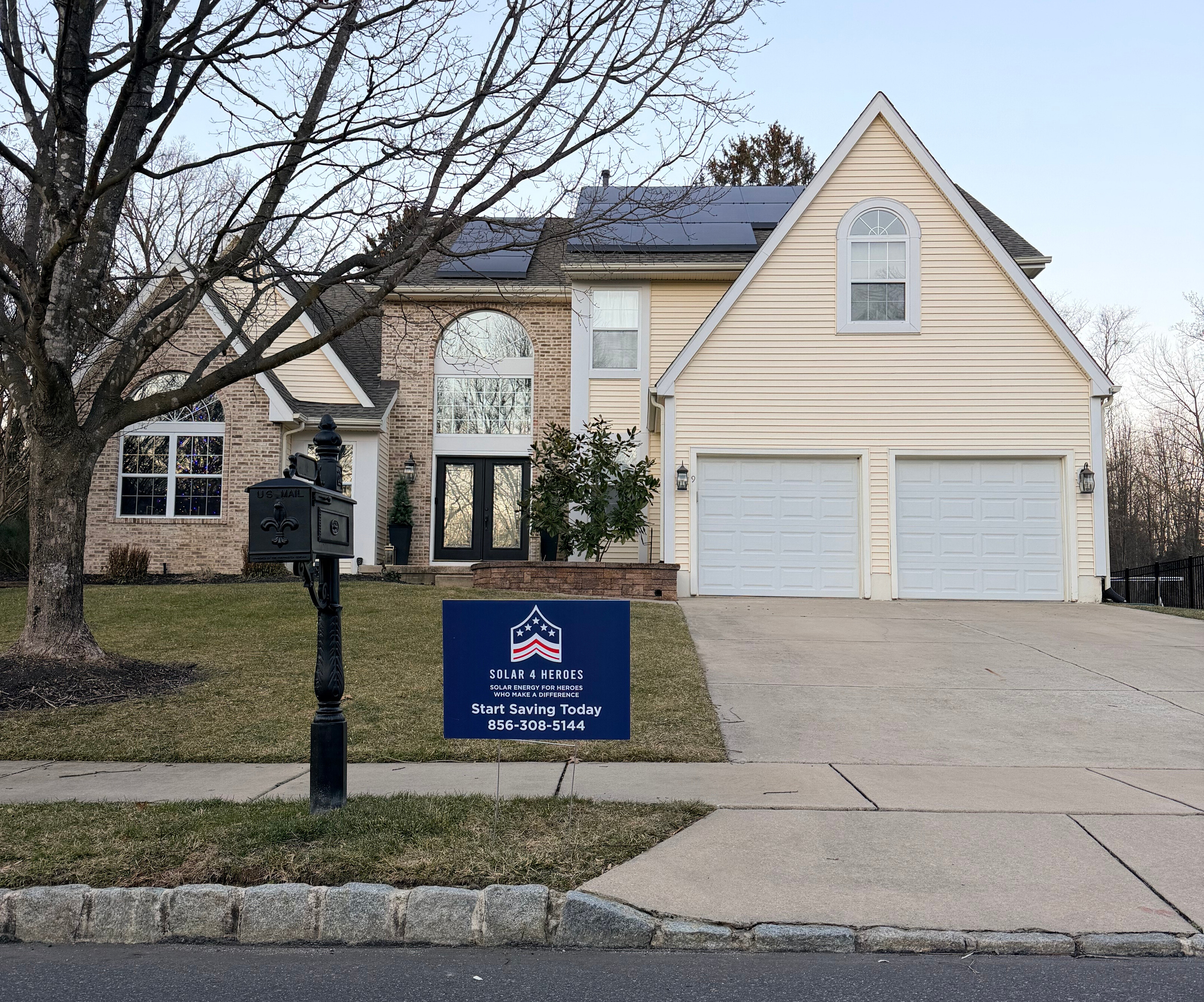
On Tuesday, September 1, 2026, Governor Mikie Sherrill stood in Trenton, plugged a small solar panel into a wall outlet, and signed the Garden State Balcony Solar Act (S2368/A4836) into law. The bill cleared both houses of the New Jersey Legislature on June 30 without a single "no" vote. Sherrill told reporters the panels "can still shave up to $50 off the typical monthly bill."
My name is CJ Smith. I own Solar 4 Heroes. We install full rooftop solar systems for homeowners across New Jersey and the East Coast, so I want to be straight with you about this new law: it's genuinely good policy, it will genuinely help some people, and it is genuinely not a substitute for what a rooftop system does for a homeowner. Those three things are all true at once, and I think you deserve the honest version rather than the headline version.
Here's what the law actually does, who it actually helps, and how the math compares to going solar on your roof.
What the Garden State Balcony Solar Act Actually Does
"Balcony solar" or "plug-in solar" refers to a small, portable solar panel — usually paired with a microinverter — that plugs directly into a standard 120-volt wall outlet. Instead of running through a formal utility interconnection, it just feeds a modest amount of power into your home's existing wiring, offsetting whatever you're using in real time. It hangs on a balcony railing, sits on a patio, or leans against a fence.
Until this law, New Jersey's rules around utility interconnection and permitting made these devices a legal gray area for most residents — technically possible, but bogged down in paperwork most people never bothered with. The new law clears that up.
| Provision | Detail |
|---|---|
| Maximum power output | 1,200 watts per household |
| Devices up to 400 watts | Exempt from UL 3700 listing and NEC/state code compliance requirements |
| Devices from 400W to 1,200W | Must be UL 3700-listed/certified and comply with the National Electrical Code and NJ Uniform Construction Code |
| Utility interconnection & net metering | Exempt — no permit, no utility application, no formal interconnection agreement required |
| Landlords, HOAs, co-ops | Barred from prohibiting tenants/residents from installing a qualifying device |
| Effective date | March 1, 2027 (six months after signing) |
Provisions per the signed text of S2368/A4836 and multiple outlets covering the September 1, 2026 signing.
New Jersey is now roughly the 10th state to pass an explicit plug-in solar law, following Utah — the first state, in March 2025 — and a wave of others earlier in 2026, including Maine, Virginia, Colorado, Maryland, Connecticut, New Hampshire, and Vermont. Balcony solar has been common in Germany and other parts of Europe for years, with more than a million units already installed there. This is a young but fast-moving policy trend, and New Jersey joining it is a good sign for the state's overall direction on residential solar access.
Why This Law Exists — and Who It's Really For
Read the bill's intent carefully and the target audience becomes clear: renters, condo owners, and residents of HOA-controlled communities who have never had a realistic path to solar because they don't own a roof, or because a landlord or association could simply say no. That's a real and long-standing gap. A homeowner with a south-facing roof and decent credit has always had options in New Jersey. A renter in a third-floor walkup never has.
Plug-in solar doesn't close that gap completely, but it opens a door that used to be locked. For a household that can't put panels on a roof they don't own, a $200–$400 balcony unit that quietly knocks a few dollars off the monthly bill — with zero permitting hassle and legal protection against a landlord who objects — is a genuinely useful option that didn't exist in New Jersey a month ago.
That's also exactly why I don't want you to walk away thinking this law changed the math for homeowners. It didn't. It solved a different problem for a different group of people.
The Honest Math: Balcony Solar vs. a Rooftop System
Here's the comparison I'd actually walk a homeowner through, not the one that makes for a punchier headline.
| Balcony/Plug-In Solar | Full Rooftop System (Solar 4 Heroes) | |
|---|---|---|
| Maximum size | 1,200 watts (1.2 kW) | Typically 6–12 kW for a NJ home |
| Who can install | Renters, homeowners, condo residents — anyone with an outlet | Homeowners with a suitable roof |
| Permit / utility approval required | No | Yes — standard NJ interconnection process |
| Net metering eligible | No — explicitly exempted from interconnection/metering rules | Yes — 1:1 credit at full retail rate |
| SREC-II / SuSI eligible | No | Yes — registered systems earn credits for 15 years |
| Sales & property tax exemption | Not applicable at this scale | Yes — both apply automatically |
| Typical upfront cost | A few hundred dollars | $0 down with a solar loan |
| Governor's own savings estimate | "Up to $50" off a typical monthly bill | Often eliminates most or all of a typical monthly bill |
Balcony solar savings estimate as stated by Governor Sherrill at the September 1, 2026 signing. Rooftop system sizing and savings vary by home; ask us for numbers specific to your address.
The reason for that gap isn't marketing spin — it's physics and paperwork. A 1,200-watt plug-in panel, running under real New Jersey sun conditions, produces a small fraction of what a home actually uses in a day, and only while the sun is out and you happen to be drawing power at that exact moment — because without a net metering agreement, any power the panel generates that your home isn't using at that instant is simply lost. A rooftop system sized to your home's actual usage, backed by New Jersey's 1:1 net metering law, banks every excess kilowatt-hour as a credit against a rate that's been rising for years. One offsets a few dollars in the moment. The other offsets your whole relationship with the grid.
I'd also point out the thing this law explicitly does not change: New Jersey's SuSI/SREC-II program, which pays a registered solar system in the mid-$70s to $85 per megawatt-hour for 15 years, and the state's automatic sales and property tax exemptions on solar installations. Those incentives exist for interconnected systems — the kind installed on a roof, inspected, and registered with the state. A 1,200-watt plug-in unit, by design, sits outside that entire framework. That's the tradeoff for skipping the permitting process: you also skip the programs built around it.
Where the Two Actually Complement Each Other
I don't think this is an either/or story for every household. If you're a homeowner who's already gone solar with a full rooftop system, a plug-in panel isn't going to move the needle much — you're already capturing the value a balcony unit is designed to offer, at a scale that actually matters. But if you rent, or you're in a condo association that still isn't sure how it feels about rooftop panels, or you own a home with a roof that's shaded, oddly angled, or a few years from replacement, a balcony unit is a real, legal, low-cost way to start cutting your bill today while you figure out your longer-term plan.
And if you're a homeowner reading this and thinking "$50 a month sounds nice, but what does my actual roof look like with a real system," that's the more useful question. Every home is different — roof angle, shading, your current usage, what your local utility charges. That's the number worth getting, not a statewide average from a bill-signing quote.
Frequently Asked Questions
When does the Garden State Balcony Solar Act take effect?
The law takes effect March 1, 2027, six months after Governor Sherrill signed it on September 1, 2026. Until then, the state's prior permitting and interconnection rules technically still apply, though enforcement against small plug-in devices has historically been minimal.
Can I install a balcony solar panel without permission from my landlord or HOA?
Once the law takes effect, yes — for qualifying devices up to 1,200 watts, landlords, homeowners associations, and co-ops cannot prohibit you from installing one. This is one of the more significant provisions of the bill, since restrictive HOA and lease rules have historically been the biggest barrier to renter and condo solar access in New Jersey.
Do balcony solar panels qualify for net metering or SRECs in New Jersey?
No. The law specifically exempts qualifying plug-in devices from utility interconnection and net metering requirements — that's what makes them permit-free. But it also means they don't bank excess production as a bill credit and don't qualify for New Jersey's SuSI/SREC-II incentive program, both of which are available only to interconnected rooftop systems.
Is balcony solar a good alternative to a full rooftop system for homeowners?
Not really, if you own your home and have a workable roof. A rooftop system sized to your household's usage, backed by 1:1 net metering and SREC-II payments, typically offsets most or all of a monthly electric bill. A 1,200-watt plug-in panel, by the governor's own estimate, offsets up to $50. It's a meaningful option for renters and condo owners who have no other path to solar — less so for a homeowner who could install a full system instead.
How many other states allow plug-in solar?
New Jersey is roughly the 10th state to pass explicit plug-in solar legislation, joining Utah (the first, in March 2025) and a group of mostly East Coast states — including Maine, Virginia, Colorado, Maryland, Connecticut, New Hampshire, and Vermont — that acted earlier in 2026. Dozens more states have introduced similar bills.
Does Solar 4 Heroes install balcony solar panels?
We focus on full rooftop systems — the installations that actually eliminate most or all of a homeowner's electric bill and qualify for New Jersey's net metering and SREC-II programs. If you're a renter or condo owner interested in a plug-in unit under the new law, retailers will begin carrying qualifying devices ahead of the March 2027 effective date. If you own your home, we'd rather show you what a real system looks like on your actual roof.
The Honest Takeaway
I'm glad this law passed. Any policy that gives a renter or a condo owner a legal, low-cost way to knock a few dollars off their bill, without asking permission from a landlord who might say no, is worth having on the books. Governor Sherrill deserves credit for signing it, and the unanimous vote in the Legislature tells you this wasn't a controversial call.
But I'd be doing you a disservice if I let a "$50 a month" headline sit next to what a real rooftop system does without drawing the distinction plainly. If you own your home, this new law isn't really about you — it's about your neighbor who rents the unit next door. What's actually about you is the roof over your head, New Jersey's 1:1 net metering law, and a rate that PSE&G, JCP&L, and every other utility in this state has been raising for years. Those are the numbers I'd rather run for you.
If you're a homeowner and you want to see what your actual roof looks like with a full system — real size, real savings, real fixed loan payment — reach out. No pressure, no inflated numbers, just the honest comparison.
Solar made easy.
📞 Call or text us directly
💻 Get a free quote at Solar4Heroes.com
Solar 4 Heroes serves homeowners across CT, DE, FL, MA, MD, NH, NJ, NY, PA, RI, and VA. Call us at (856) 308-5144 or reach out at cj@solar4heroes.com.
Ready to Go Solar?
Get your free solar estimate and start saving on your energy bills today.
Get Free Estimate