
NJ's Grid Hit an All-Time Record, Then Storms Knocked Out Power for Days — Why Solar Alone Isn't Enough
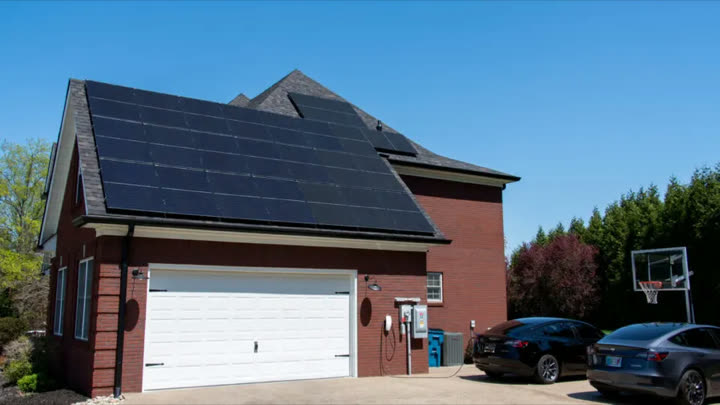
If you lost power at some point during the first week of July, you were not alone — not even close.
On July 2, 2026, PJM Interconnection — the grid operator that keeps the lights on for 67 million people across 13 states including New Jersey — recorded an all-time peak demand of roughly 168,158 megawatts, breaking a record that had stood since August 2, 2006, when the prior all-time peak was 165,563 MW. The region hit its hottest-ever average temperature across the entire grid footprint that day, some power plants tripped offline under the strain, and the U.S. Department of Energy issued an emergency order — the third one PJM needed in 2026 alone, after similar orders during a January cold snap and a May heat-and-maintenance squeeze — just to keep the grid standing up through the worst of it.
Then, that same holiday weekend, severe thunderstorms with damaging winds tore through New Jersey on top of the heat. JCP&L reported more than 200,000 customers without power, with roughly 150,000 still dark the next morning. PSE&G spent the better part of a week working around the clock, ultimately restoring power to more than 380,000 customers between the July 1 heat event and the storms that followed — with the very last customers not getting their lights back until 2 a.m. on July 8.
My name is CJ Smith. I own Solar 4 Heroes. I've spent this week fielding calls from homeowners who want to know one thing: if they'd had solar panels on their roof during those outages, would their power have stayed on?
The honest answer is no — not by itself. And I think you deserve to hear exactly why, because most solar companies won't tell you this part clearly.
What Actually Happened to the Grid the First Week of July
Let's separate the two events, because they compounded each other.
Event one: record heat, record demand. A multi-day heat dome pushed electricity demand across the PJM footprint to an all-time high on July 2. The Department of Energy's emergency order (No. 202-26-32) took effect at 11:59 p.m. on June 30 and ran through 11:59 p.m. on July 3, directing specific power plants to run at maximum output and temporarily waiving some environmental limits just to keep enough generation online. PJM also leaned on demand-response programs — paying large customers to reduce usage — to shave an estimated 6,000+ megawatts off the peak.
Event two: the storms that followed. As the heat broke, severe thunderstorms with winds strong enough to snap power lines and topple trees swept across the state over the July 4th weekend. At the combined peak, reports put the number of New Jersey customers without power at points across the week in the hundreds of thousands. JCP&L and PSE&G both activated full-scale, multi-day restoration efforts, bringing in mutual-aid crews from out of state to get everyone reconnected.
Here's the pattern that matters for homeowners: the outages didn't happen because the sun stopped shining or because there wasn't enough clean energy potential in New Jersey. They happened because the delivery system — the wires, poles, transformers, and the regional market that schedules generation to meet demand — got overwhelmed at the exact moment people needed power most, to run air conditioning through dangerous heat.
| Event | Date | Key Number |
|---|---|---|
| PJM all-time peak demand record | July 2, 2026 | ~168,158 MW (previous record: 165,563 MW, set Aug. 2, 2006) |
| DOE emergency order (3rd in 2026) | June 30 – July 3, 2026 | Directed plants to run at max output; waived some pollution limits |
| JCP&L storm outages | July 4–5, 2026 | 200,000+ customers, ~150,000 still out next morning |
| PSE&G cumulative restoration | July 1–8, 2026 | 380,000+ customers restored; last customers back at 2 a.m. July 8 |
Here's the Part Most Solar Companies Skip: Solar Alone Doesn't Keep the Lights On
This is the honest conversation I have with every homeowner who calls me asking if solar would have saved them from last week's blackouts.
Standard grid-tied solar panels — the kind most homeowners install — are required by national electrical safety standards (UL 1741 and IEEE 1547) to shut themselves off automatically within seconds of a grid outage. This is called "anti-islanding" protection, and it's not a flaw — it's a safety feature. If your panels kept pushing electricity into the grid while the power was out, they could electrocute a utility lineworker trying to repair a downed line, believing it was dead.
So here's the uncomfortable truth: on the sunniest day of the year, with your panels fully capable of generating electricity, a standard grid-tied solar system goes completely dark the moment your utility's power does. Your roof could be soaking up sunshine while your refrigerator sits warm and your sump pump sits idle. That's not a hypothetical — it's exactly what happened to grid-tied solar owners across New Jersey during last week's storms, unless their system included a battery.
I'd rather tell you that plainly than have you find out the hard way during the next outage.
What Actually Changes the Equation: Battery Storage
A solar-plus-battery system works differently. When the grid goes down, a properly installed battery system with the right inverter equipment disconnects your home from the grid and creates what's essentially a small private power system just for your house. Your solar panels keep charging the battery during the day, and the battery keeps your essential circuits — refrigerator, Wi-Fi, phone chargers, lights, a sump pump, medical equipment — running whether the sun is up or not.
A single home battery in the 10–13 kWh range (the size of a Tesla Powerwall or comparable Enphase or FranklinWH unit) can typically power essential loads for 12 to 24 hours on a full charge alone. Pair it with solar recharging it every day, and a well-sized system can keep those essential loads running indefinitely through a multi-day outage like the one JCP&L and PSE&G customers just lived through — as long as there's daylight to recharge it.
Whole-home backup — where everything in your house, including central air conditioning, keeps running through an outage — requires a larger battery bank and a bigger up-front investment. Most homeowners I talk to land on "essential circuits" backup as the practical middle ground: it costs meaningfully less than whole-home backup, and it covers what actually matters during a blackout.
| Grid-Tied Solar (No Battery) | Solar + Battery Storage | |
|---|---|---|
| Power on a sunny day, grid working | ✅ Full production | ✅ Full production |
| Power during a grid outage | ❌ Shuts off automatically (anti-islanding) | ✅ Essential circuits (or whole home) stay powered |
| Recharges during outage | N/A — system is off | ✅ Solar recharges battery each day |
| Typical installed cost add-on | — | Roughly $10,000–$16,000, depending on battery size and home setup |
| Backup duration on battery alone | — | ~12–24 hours per full charge (varies by usage and battery size) |
Battery cost and duration figures are typical industry ranges; your actual price depends on system size, home electrical panel, and which circuits you choose to back up. We'll give you specific numbers for your home.
The Financial Backdrop Hasn't Gotten Easier
None of this is happening in a vacuum. New Jersey's electricity rates were already among the fastest-rising in the country heading into this summer. PSE&G's all-in residential rate has climbed from roughly $0.21/kWh in January 2024 to around $0.27/kWh as of June 2026 — an increase of close to 28% in under two and a half years. Statewide, New Jersey's average residential rate is now running somewhere in the 23–24 cents per kWh range, by most current estimates 18–25% above the national average.
At the same time, one of New Jersey's key solar incentives just stepped down. The state's SuSI/ADI program (what most homeowners still call "SRECs") pays solar owners a fixed incentive for every megawatt-hour their system produces, locked in for 15 years from the date your system is registered. That rate dropped from $85/MWh to $76.50/MWh — roughly a 10% reduction — for residential systems registered on or after March 6, 2026. It's a step-down program by design: as more homeowners go solar, the incentive rate for newly registered systems gradually declines. It doesn't go back up, and it doesn't apply retroactively to anyone already locked in at the higher rate.
I'm not going to manufacture urgency that isn't there — the incentive doesn't disappear, and $76.50/MWh is still real money over 15 years. But it is lower than it was a few months ago, and the honest math is that every month you wait is a month you're not accumulating either the incentive payments or the bill savings, while your utility rate keeps climbing in the direction it's been climbing for two straight years.
What I'd Actually Recommend
If you're weighing solar for the first time, or if you already have solar without a battery and last week's outages got your attention, here's how I'd think about it, honestly:
If backup power during outages matters to you — because you work from home, have medical equipment, a sump pump in a flood-prone basement, or simply don't want to lose a freezer full of food again — a battery add-on is worth pricing out specifically. It's a genuine additional cost on top of a standard solar system, and I'll tell you the real number for your home rather than a rounded-up estimate.
If your primary goal is lowering your bill, a standard grid-tied system without a battery still does that job well, and it costs less. It just won't keep your lights on during the next storm-driven blackout — and after this month, that's no longer a hypothetical scenario for New Jersey homeowners.
Either way, financing exists for both paths, including $0-down options, so the upfront cost doesn't have to be the deciding factor. The deciding factor should be what actually matters for your household.
Frequently Asked Questions
Do solar panels work during a power outage?
Not by default. Standard grid-tied solar systems are required by national safety codes (UL 1741 and IEEE 1547) to automatically shut off within seconds of a grid outage — a safety feature called anti-islanding that protects utility workers repairing power lines. Your panels could be generating electricity on a sunny day, but without a battery, none of it reaches your home during an outage.
Why did my power go out in New Jersey in early July 2026?
A record-breaking heat wave pushed PJM's regional grid to an all-time peak demand of roughly 168,158 megawatts on July 2, 2026, prompting a federal emergency order to keep enough power plants running. That same holiday weekend, severe storms with damaging winds swept through New Jersey, snapping power lines and knocking out power to hundreds of thousands of JCP&L and PSE&G customers on top of the heat-driven strain on the grid.
How much does a home battery backup system cost in New Jersey?
Battery add-ons typically run in the range of $10,000 to $16,000 installed, depending on the battery's size and how many circuits in your home you want backed up. A single battery in the 10–13 kWh range can usually power essential circuits like your refrigerator, Wi-Fi, and lights for 12 to 24 hours per full charge, with solar recharging it during the day.
Can a solar battery power my whole house, or just some things?
Both are possible, but they cost differently. Most homeowners choose "essential circuits" backup — refrigerator, some lighting, Wi-Fi, a sump pump, medical equipment — which requires a smaller, less expensive battery setup. Whole-home backup, including central air conditioning, requires a larger battery bank and a bigger investment. We'll walk you through both options and real pricing for your home.
Is New Jersey's SREC-II solar incentive rate going down?
Yes. New Jersey's SuSI/ADI program, which pays solar owners a fixed incentive per megawatt-hour of production for 15 years, dropped from $85/MWh to $76.50/MWh for residential systems registered on or after March 6, 2026 — about a 10% reduction. It's a scheduled step-down as more homeowners adopt solar, not a one-time event, and it doesn't apply retroactively to systems already registered at the earlier rate.
Does Solar 4 Heroes install battery backup systems?
Yes — we can pair a new solar system, or in some cases an existing one, with battery storage. We'll give you honest numbers on what backup coverage costs for your specific home and electrical setup, and help you decide whether essential-circuit backup or whole-home backup makes more sense for your situation.
The Grid Showed Its Hand This Month
I don't think what happened the first week of July was a fluke. A grid that sets an all-time demand record and then gets knocked sideways by a summer thunderstorm a few days later is telling you something about the margin it's operating on — and that margin has been getting thinner for years, not thicker.
Solar panels are a great long-term answer to what your electricity costs. They are not, by themselves, an answer to what happens when the grid goes down. If last week reminded you how much you depend on that grid staying up, that's a fair thing to want to change — and it's a different conversation than the one about your monthly bill. I'm happy to have both with you, honestly, and let you decide what's worth it for your home.
Solar made easy.
📞 Call or text us directly
💻 Get a free quote at Solar4Heroes.com
Solar 4 Heroes serves homeowners across CT, DE, FL, MA, MD, NH, NJ, NY, PA, RI, and VA. Call us at (856) 308-5144 or reach out at cj@solar4heroes.com.
Ready to Go Solar?
Get your free solar estimate and start saving on your energy bills today.
Get Free Estimate