
North Carolina Solar Incentives in 2026: Duke's Bridge Rate Deadline, PowerPair, and Property Taxes
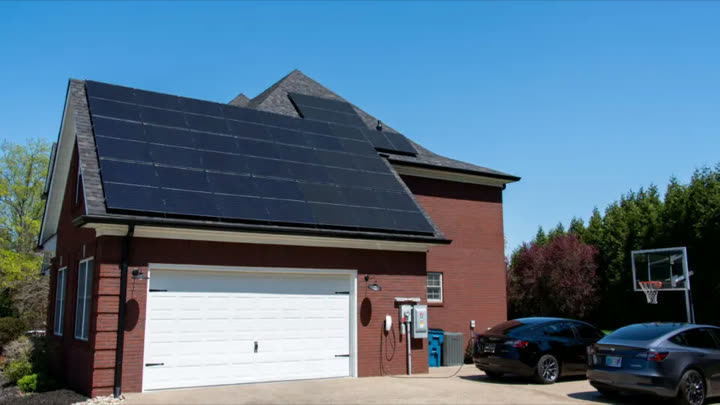
If you're a Duke Energy customer in North Carolina thinking about solar, the most important date this year is the end of December. Duke's Bridge Rate, the net metering option that has let new solar customers keep simple, favorable credits for 15 years, is scheduled to close to new applicants at the end of 2026. After that, new customers go onto a time-of-use plan.
My name is CJ Smith. I own Solar 4 Heroes, and we help homeowners across North Carolina, including Raleigh, Greensboro, and Charlotte, go solar. Here's what's available now and what changes next.
The Short Version
| Incentive | What you get | Status (Nov. 2026) |
|---|---|---|
| Duke Bridge Rate | Net metering credits on a standard (non-time-of-use) rate, locked in for 15 years | Scheduled to close to new applicants at the end of 2026 |
| Residential Solar Choice | Duke's plan for new solar customers after the Bridge Rate, built on time-of-use pricing | Starts in 2027 |
| PowerPair rebate | Up to $3,600 for solar plus up to $5,400 for a battery | Limited funding; heavily subscribed |
| Battery bill credits | Monthly credits for letting Duke use your battery a limited number of times a year | Available |
| Property tax exclusion | 80% of a solar system's appraised value excluded, and possibly more for home systems | State law |
| 30% federal tax credit | Was 30% of system cost | Ended for homeowner-owned systems after 2025 |
Duke's Bridge Rate vs. Residential Solar Choice
Duke Energy serves most of North Carolina. Raleigh is in Duke Energy Progress territory, and Charlotte and Greensboro are in Duke Energy Carolinas territory. Both offer two paths for new rooftop solar customers.
The Bridge Rate (through 2026). Customers who qualify get credit for excess solar exported to the grid at a favorable rate, can stay on a standard residential rate instead of time-of-use pricing, and keep the arrangement for 15 years. There's a monthly minimum bill. Placement is based on when your interconnection application is submitted, and the window is reported to close at the end of 2026. If you're considering solar, talk to an installer now about whether a complete application can be filed in time, and confirm the exact cutoff with Duke.
Residential Solar Choice (from 2027). New solar customers after the Bridge Rate closes go onto Residential Solar Choice, which requires a time-of-use rate with critical peak pricing. Electricity costs more at peak times, and on a limited number of critical-peak days each year (typically during extreme summer heat) it costs much more. There are also minimum bill and non-bypassable charges. Solar still works under this plan, but when you use power matters a lot more, which makes a home battery more valuable.
The PowerPair Rebate
Duke's PowerPair pilot rewards new solar customers who add a battery:
- Solar: $0.36 per watt, up to 10 kW, for a maximum of $3,600
- Battery: $400 per kWh, up to 13.5 kWh, for a maximum of $5,400
- That's up to $9,000 combined
PowerPair is for new solar customers who install solar and a battery together. Customers who already have solar and add a battery don't qualify. Funding is limited, enrollment has run in selection windows, and the program has been reported as heavily subscribed in 2026, so check with Duke on current availability before counting on it.
Battery Bill Credits
Separately from PowerPair, Duke offers monthly bill credits to customers who let Duke draw on their home battery during a limited number of grid events each year. Published program examples range from roughly $420 a year for a 10 kWh battery to more for larger systems. The exact credit depends on the battery and program terms, so confirm with Duke for your system.
Property Taxes
North Carolina law (G.S. 105-275(45)) excludes 80% of the appraised value of a solar energy electric system from property tax. For homeowners there's a further point: the NC Department of Revenue's position is that residential systems that aren't used to produce income or in connection with a business may be excluded entirely as non-business personal property. How that's applied is up to your county assessor. A 2025 bill proposed repealing the exclusion for systems placed in service on or after July 1, 2027, so check its status if you're planning a 2027 install.
Frequently Asked Questions
What is Duke Energy's Bridge Rate?
It's a net metering option for new Duke Energy solar customers in North Carolina. It credits excess solar exported to the grid at a favorable rate, lets customers stay on a standard residential rate, and lasts 15 years. It's scheduled to close to new applicants at the end of 2026, based on when the interconnection application is submitted.
What happens to net metering in North Carolina in 2027?
New Duke Energy solar customers will be placed on Residential Solar Choice, which requires a time-of-use rate with critical peak pricing, plus minimum bill and non-bypassable charges. Customers already on the Bridge Rate keep it for their 15-year term.
Is Duke Energy's PowerPair rebate still available?
It has limited funding and has been reported as heavily subscribed in 2026. It pays up to $3,600 for solar and up to $5,400 for a battery for new solar customers who install both. Check with Duke for current availability.
Do solar panels raise property taxes in North Carolina?
North Carolina excludes 80% of a solar energy system's appraised value from property tax, and the state Department of Revenue's position is that home systems not used to produce income may be excluded entirely. Your county assessor applies the rules.
Is there a North Carolina state tax credit for solar?
North Carolina's state solar tax credit expired years ago, and the 30% federal residential credit ended for homeowner-owned systems after 2025. The main incentives now are Duke's net metering options, PowerPair, battery credits, and the property tax exclusion.
The Bottom Line
North Carolina's biggest solar decision right now is timing. The Bridge Rate offers 15 years of simpler net metering for Duke customers who get their interconnection applications in before it closes. After that, solar plus a battery under time-of-use pricing becomes the main path. Either way, the property tax exclusion still applies, and PowerPair can help if funding is available.
Solar made easy.
📞 Call or text us directly
💻 Get a free quote at Solar4Heroes.com
Solar 4 Heroes serves homeowners across CT, DE, FL, GA, MA, MD, NC, NH, NJ, NY, PA, RI, SC, and VA. Call us at (856) 308-5144 or reach out at cj@solar4heroes.com. This article is general information, not tax or legal advice; Duke's tariffs and program funding change, so confirm current terms and deadlines before you buy.
Going solar in North Carolina? See solar incentives and service areas for North Carolina.
Related Articles
- New Jersey Solar Incentives in 2026: The Complete, Up-to-Date GuideEvery solar incentive New Jersey homeowners can actually use in 2026: the SuSI/SREC-II payment (now $77/MWh for new systems), net metering, the sales tax exemption, the property tax exemption, and PowerUp NJ for batteries. Solar 4 Heroes owner CJ Smith keeps this guide current.
- South Carolina Solar Tax Credit and Incentives in 2026: What Homeowners Actually GetSouth Carolina's 25% state solar tax credit is one of the best in the country, but the $3,500-a-year and 50%-of-tax limits decide how fast you get it. Solar 4 Heroes owner CJ Smith explains the credit, Solar Choice net metering, Santee Cooper's rebate, and the property tax exemption.
- Maryland Solar Incentives in 2026: Tax Exemptions, Net Metering, and the State RebateWhat Maryland homeowners actually get for going solar in 2026: property and sales tax exemptions, net metering (and its 2027 changes), the income-qualified Maryland Solar Access Program, and options for Pepco customers in Rockville and Montgomery County. From Solar 4 Heroes owner CJ Smith.
Ready to Go Solar?
Get your free solar estimate and start saving on your energy bills today.
Get Free Estimate