
PECO 12.5% Rate Hike 2027: What Philadelphia-Area Homeowners Need to Know
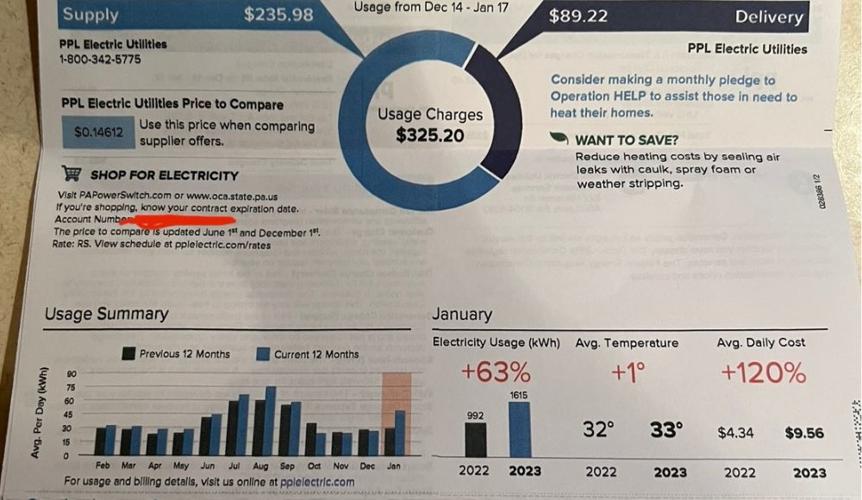
It happened on March 30, 2026 — one of those news days that flies under the radar unless you're paying close attention. PECO, the utility serving 1.7 million electric customers across Philadelphia and southeastern Pennsylvania, filed two formal requests with the Pennsylvania Public Utility Commission asking to raise rates.
The numbers: a 12.5% increase for electricity customers, adding $20.08 per month to the average residential bill. And an 11.4% increase for suburban natural gas customers, adding another $14.52 per month. If you have both services — and many PECO customers do — you're looking at a potential combined increase of $34.60 per month starting January 1, 2027.
That's on top of the 10% electric rate hike that went into effect in January 2025, and the 2.8% distribution increase that hit in January 2026.
If you're keeping score at home: PECO has now raised or proposed raising electric rates three times in three years. And through all of it, they posted $814 million in net profit in 2025 — a 47.7% jump over the year before.
My name is CJ Smith. I own Solar 4 Heroes. I help homeowners in New Jersey and Pennsylvania go solar with $0 down. I don't say what I'm about to say to sell you something. I say it because it's true and I think you deserve to hear it plainly: the best protection against this rate hike is to stop depending on PECO for the electricity you generate yourself.
Here's the full picture.
What PECO Is Asking For — and Why
On March 30, PECO filed two requests with the Pennsylvania PUC seeking a combined $510 million in additional annual revenue — $429 million for electric distribution and $81 million for natural gas. This kicks off a months-long regulatory review process before any rates actually change.
PECO's stated justification is infrastructure. The company wants to replace aging gas mains, upgrade substations, fund an $130 million vegetation management program to reduce outage-causing tree contact with power lines, and modernize the grid to handle growing demand from electric vehicles and data centers. PECO expects to spend about $2.8 billion on its distribution system from January 2026 through the end of 2027.
PECO senior vice president Doug Oliver acknowledged the awkward optics of asking customers for more money while operating in one of the most expensive energy markets in the country. "We know that our customers are being squeezed in almost every area of their life," he said. "We spent a lot of time trying to figure out if there's a way to not do this today. And unfortunately, we concluded that there was no other way."
To soften the blow, PECO is proposing to spread some cost recovery over six years rather than front-loading it all in 2027. The company says that approach would reduce the immediate impact by $88 million — translating to roughly $2.30 less per month than the full increase would otherwise deliver.
But let's be clear about what the PUC process means in practice: it's a negotiation, not a veto. The PUC will review the request, consumer advocates will push back on PECO's proposed 10.95% return on equity (which critics argue should be closer to 6–7%), and the final approved increase will likely land somewhere between zero and the full amount requested. But history tells us some increase almost always gets approved. PECO's 2024 filing — for a 10% electric hike plus 12.5% on gas — got approved, spread over two years.
The Rate Hike History Nobody Is Talking About
To understand why this matters, you need to see the full three-year pattern:
| Date | PECO Electric Rate Change | What Happened |
|---|---|---|
| January 2025 | +10.0% | PUC-approved, part of 2024 rate case |
| January 2026 | +2.8% | Continuation of same 2024 rate case |
| January 2027 (proposed) | +12.5% | New filing, March 30, 2026 |
| Cumulative increase 2025–2027 | ~27% in three years | If proposed hike is approved in full |
For a typical PECO customer using 700 kWh per month, that trajectory looks like this:
| Year | Estimated Monthly Bill | Year-Over-Year Change |
|---|---|---|
| 2024 (baseline) | ~$144 | — |
| 2025 | ~$158 | +$14 (+10%) |
| 2026 | ~$162 | +$4 (+2.8%) |
| 2027 (if approved) | ~$182 | +$20 (+12.5%) |
| Total increase from 2024 | +$38/month | +26% in three years |
Based on PECO's published rate case figures and PUC-approved prior increases. Actual bills vary by usage.
Meanwhile, the company's parent, Exelon, reported record profits during this same period. PECO's net income shot up 47.7% in 2025. Exelon's CEO made over $15.6 million that year. I'm not saying profitable utilities are inherently bad — infrastructure costs money and someone has to pay for it. But I do think it's fair to ask whether the customers footing these bills are getting the best deal available to them.
The answer, increasingly, is no. Not when rooftop solar exists.
What $20 More Per Month Actually Costs You Over Time
Let's do math that PECO's announcement doesn't include.
The proposed $20.08 monthly increase sounds manageable in isolation. But rate hikes compound. At a modest 3% annual increase — well below PECO's recent pace — a customer who stays on the grid for the next 25 years will pay significantly more than today's bill in later years.
Here's what that trajectory looks like compared to going solar now:
| Scenario | 5-Year Total | 10-Year Total | 25-Year Total |
|---|---|---|---|
| Stay on PECO grid (3% annual increases) | ~$10,500 | ~$23,000 | ~$72,000 |
| Stay on PECO grid (PECO's actual recent pace) | ~$12,000+ | ~$29,000+ | Much higher |
| Go solar with Solar 4 Heroes ($0 down loan) | Fixed payments | Fixed payments | System paid off — free electricity |
Estimates based on $162/month 2026 starting bill with 3% annual increase. Solar loan figures vary by system size and financing terms.
One of the local solar companies covering the area put it bluntly, and I think they're right: "You are already paying for a solar system; you're just paying your utility company for it instead of owning it yourself."
That's not a marketing line. That's arithmetic.
Pennsylvania's Solar Incentive Stack in 2026
I want to be direct about what's available in Pennsylvania, because it's different from New Jersey — and some installers aren't giving customers the full picture.
The federal 30% solar tax credit is gone. The Section 25D residential credit was repealed effective January 1, 2026. Systems installed in 2025 can still claim it on 2025 returns. New installations in 2026 do not qualify for any direct federal tax credit on a cash or loan purchase.
Here's what Pennsylvania does have:
Net Metering: Full Retail Rate Credit
Pennsylvania law mandates net metering for all investor-owned utilities — including PECO. Every kilowatt-hour your solar panels produce that you don't immediately consume gets credited to your bill at the full retail rate of electricity. Those credits roll over month to month and reset annually.
This is significant: when PECO raises its rate, the value of every credit your panels earn goes up with it. A 12.5% rate hike in 2027 means your solar net metering credits are worth 12.5% more. Your system's savings grow when PECO raises rates. That's the inverse of what grid customers experience.
SRECs: $25–$40 Per Credit, Earned for Every MWh You Generate
Pennsylvania's Alternative Energy Portfolio Standards require utilities to source a portion of their electricity from solar. To meet that requirement, they buy Solar Renewable Energy Credits (SRECs) from homeowners like you — one credit per megawatt-hour your system generates.
Current PA SREC prices are trading in the $25–$40 range per credit. For a typical 10 kW system generating around 12,000 kWh per year, that's $300–$480 in annual SREC income on top of your bill savings. SRECs have a three-year shelf life and are sold through brokers like SRECTrade or Flett Exchange — your installer handles the initial registration.
It's worth noting: Pennsylvania's SREC values are modest compared to neighboring New Jersey, where the SuSI program pays a fixed $85/MWh for 15 years. But proposed legislation — the PRESS Act — would significantly increase Pennsylvania's solar energy requirements, which could push SREC prices meaningfully higher. Installing now locks in participation before that demand spike.
The Full PA Incentive Picture
| Incentive | Status | Value |
|---|---|---|
| Federal ITC (Section 25D) | ❌ Expired Dec 31, 2025 | Gone for direct purchases |
| Federal 48E (via lease/PPA) | ✅ Available through 3rd-party ownership | Passed through as lower rate |
| Net Metering (full retail rate) | ✅ Mandated — all PA IOUs incl. PECO | Eliminates most/all of grid bill |
| PA SRECs | ✅ Active — $25–$40/MWh | $300–$480/yr for typical system |
| PA Sales Tax Exemption | ❌ Not available in PA | — |
| PA Property Tax Exemption | Varies by municipality | Check locally |
Pennsylvania's incentive stack is leaner than New Jersey's — no automatic sales tax exemption, no 15-year fixed SREC rate. But net metering at the full retail rate combined with SREC income and, most importantly, the elimination of a rapidly rising utility bill, still makes a compelling financial case — especially right now, with another major rate hike formally on the table.
The $0 Down Loan: Lock In Your Rate Before January 2027
Here's the path I recommend for most PECO customers I talk to: a solar loan with $0 down, fixed monthly payment, no escalator.
A financing partner covers the full system cost at installation. You own the panels from day one. Your monthly loan payment is set at signing and never changes — not when PECO files its next rate case, not when PJM runs its next capacity auction, not when Exelon reports another record profit year.
Here's what that comparison looks like side by side:
| Upfront Cost | Monthly Cost | Increases Over Time? | You Own It? | |
|---|---|---|---|---|
| Stay on PECO | $0 | ~$162 today, $182+ in 2027 | ✅ Yes — proven track record | ❌ No |
| Solar 4 Heroes Loan | $0 | Fixed at signing | ❌ Never | ✅ From day one |
The loan payment replaces most or all of your PECO bill — meaning for most households, the switch is cash-flow neutral or cash-flow positive from the very first month. And because you own the panels, you collect the SREC payments directly.
Here's the timing piece that matters: the PUC review process for PECO's rate case takes several months. A decision is expected in late 2026, with new rates taking effect January 1, 2027. A solar installation that takes 60–90 days from contract to Permission to Operate means homeowners who act this spring can be generating their own electricity before that decision even comes down.
If you wait until January 2027 to "see what happens," you'll be paying the higher rate while your panels are still being permitted.
What About PECO's $88 Million Customer Relief Plan?
I want to address this, because PECO's press materials highlight it prominently and it sounds significant.
The $88 million is a cost-spreading mechanism — not a rebate, not a credit, and not a reduction in what you'll ultimately pay. It represents the savings from deferring certain cost recoveries over six years rather than collecting them all in 2027. The monthly impact is about $2.30 less per month in 2027 if this mechanism is approved.
So instead of paying $20.08 more per month, you'd pay approximately $17.78 more per month — until the deferred costs are collected over the subsequent years.
I'm not saying this is nothing. But $2.30 per month is not a solution to a rate hike. It's a scheduling adjustment. The money PECO needs to collect doesn't disappear — it gets collected over time, just on a slower curve.
Frequently Asked Questions
Is the PECO rate hike approved?
Not yet. PECO filed the request with the Pennsylvania PUC on March 30, 2026. The PUC will conduct a formal review — typically taking 6–9 months — before making a decision. Consumer advocates, including the Pennsylvania Office of Consumer Advocate, will participate and argue for a lower increase. The final approved amount is often less than what was requested, but some increase is historically very likely.
When would the PECO rate hike take effect?
If approved, the new rates would take effect January 1, 2027. The offset mechanism PECO proposed would phase in starting April 2027, reducing the monthly impact slightly.
How much has PECO raised rates in recent years?
PECO raised electric rates 10% in January 2025 and 2.8% in January 2026, both stemming from its 2024 rate case filing. The proposed 12.5% in 2027 would be PECO's third consecutive annual electric rate increase and would bring the cumulative increase to roughly 27% in three years.
Does going solar in Pennsylvania still make sense without the federal tax credit?
Yes — net metering at the full PECO retail rate means every kilowatt-hour your panels produce offsets electricity you'd otherwise buy from a utility that just proposed raising its rates by 12.5%. PA SRECs add $300–$480 in annual income on top of bill savings. And with a $0 down loan, there's no upfront cost to overcome. The math still works.
What happens to my solar savings when PECO raises rates?
They increase. Under Pennsylvania's net metering policy, your excess solar production is credited at the full retail rate. When that rate goes up, so does the value of every credit your panels earn. Rate hikes that hurt grid customers actually improve solar economics. Your loan payment stays the same while your savings grow.
Does Solar 4 Heroes serve the PECO service area?
Yes — we work with homeowners across the Philadelphia suburbs and surrounding southeastern Pennsylvania communities in addition to our New Jersey customers. If you're a PECO customer and want to know what your home looks like with solar, reach out. We'll give you honest numbers with no pressure.
The Pattern Is Clear. The Decision Is Yours.
PECO raised rates in 2025. PECO raised rates in 2026. PECO just filed to raise them again in 2027. And through each increase, PECO's parent company reported rising profits, and the customers who stayed on the grid paid more.
I'm not here to tell you the utility is evil or that the infrastructure investments are fake. The grid needs maintenance. Rates sometimes need to go up. I understand that.
What I am telling you is that you have a choice — and that choice has a dollar value attached to it. Every month you delay going solar is another month you're paying a rate that has been increasing by double digits, to a company whose next rate case is already filed, whose executive compensation is already public, and whose trajectory over the next 25 years is almost certainly up.
Your solar loan payment? Fixed. Today. Forever.
If you're a PECO customer in the Philadelphia region, reach out to us. We'll show you exactly what your home could look like with solar — real system size, real savings projection, real loan payment — compared to what PECO's proposed 2027 bill looks like and beyond. No jargon. No runaround.
Solar made easy.
📞 Call or text us directly
💻 Get a free quote at Solar4Heroes.com
Solar 4 Heroes serves homeowners across CT, DE, FL, MA, MD, NH, NJ, NY, PA, RI, and VA. Call us at (856) 308-5144 or reach out at cj@solar4heroes.com.
Ready to Go Solar?
Get your free solar estimate and start saving on your energy bills today.
Get Free Estimate