
The True Cost of Charging a Tesla in New Jersey — And How Solar Eliminates It
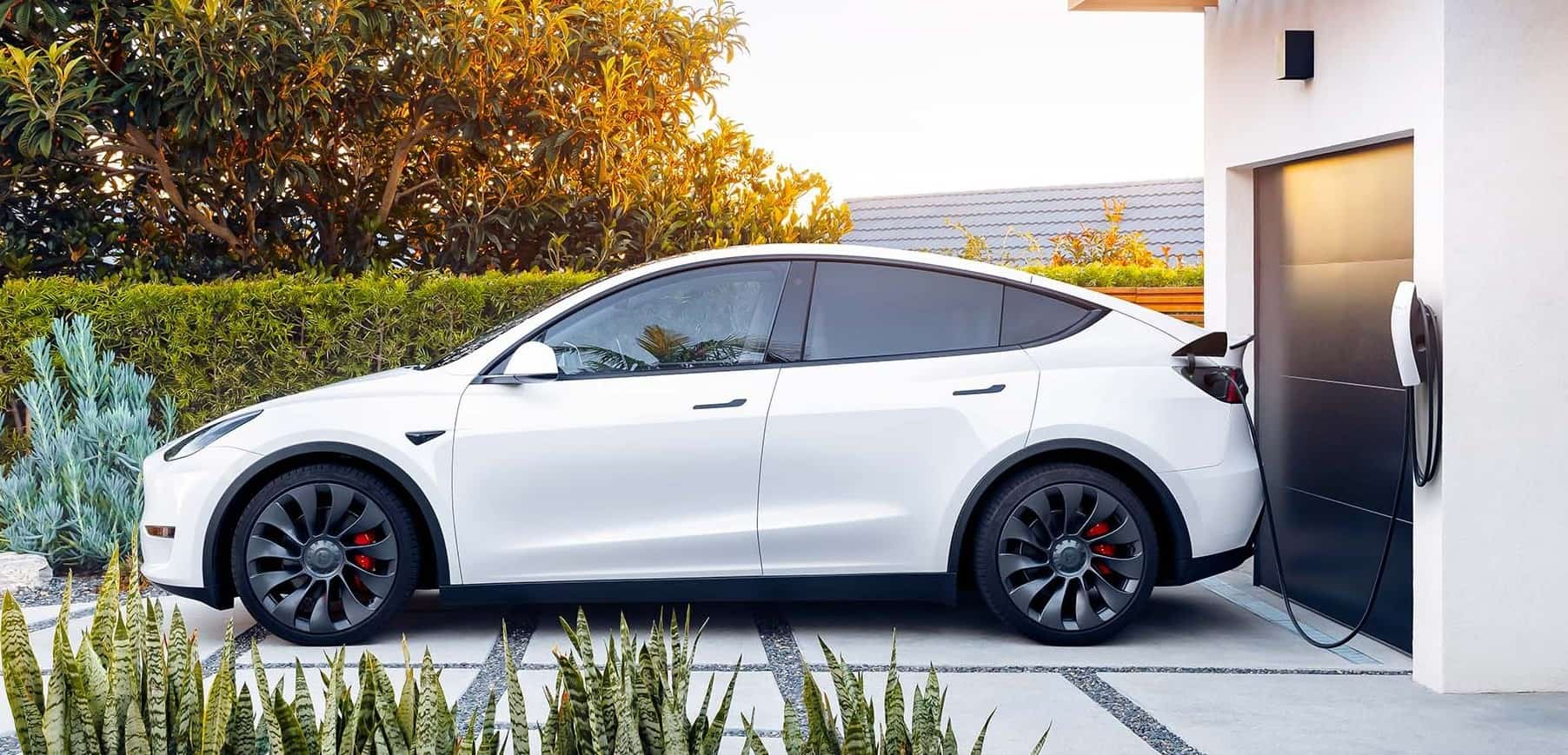
I love talking to Tesla owners. Not because they're necessarily thinking about solar when they call me — most of them aren't, at first. They call because their electricity bill jumped after they got the car, and they want to understand why.
The conversation usually goes something like this. They ditched their gas car, bought a Model 3 or Model Y, felt great about never stopping at a gas station again — and then opened their next PSE&G bill and did a double-take. The bill was noticeably higher. Sometimes a lot higher. And they're not sure whether to blame the car or the utility.
The honest answer is: both.
My name is CJ Smith. I own Solar 4 Heroes, and I help New Jersey homeowners go solar with $0 down. I want to give you the real breakdown on what it actually costs to charge a Tesla in New Jersey — not the national average number Tesla uses in its marketing, but the New Jersey-specific math — and then show you exactly how rooftop solar changes that equation entirely.
The Sales Pitch vs. The Reality
Tesla's messaging around fuel savings is accurate — it's just calculated against the national average electricity rate of around $0.14–$0.17 per kWh. That math holds up in states with cheap power. New Jersey is not one of those states.
As of March 2026, New Jersey's average residential electricity rate is $0.20–$0.26 per kWh, depending on your utility. That's 20–50% higher than the national average Tesla uses in its cost comparisons. When you run the charging math using New Jersey's actual rates, the "free fuel" narrative gets a lot more complicated.
You're not paying for gas anymore. You're paying for electricity. And in New Jersey right now — the state that just saw the highest electricity rate spike of any state in the country in 2025 — that's not a trivial distinction.
What It Actually Costs to Charge Each Tesla Model in New Jersey
Here's the model-by-model breakdown using New Jersey's current electricity rate range of $0.20–$0.26/kWh, accounting for standard 90% Level 2 charging efficiency:
Tesla Model 3 (RWD — most popular)
- Battery capacity: 62.3 kWh
- EPA range: 272 miles
- Cost per full charge in NJ: $13.84 – $18.00
- Cost per mile: $0.051 – $0.066
- Annual cost (13,500 miles): $689 – $891
Tesla Model Y (Long Range — best seller in NJ)
- Battery capacity: 75 kWh
- EPA range: 330 miles
- Cost per full charge in NJ: $16.67 – $21.67
- Cost per mile: $0.051 – $0.066
- Annual cost (13,500 miles): $689 – $891
Tesla Model S (Long Range)
- Battery capacity: 100 kWh
- EPA range: 405 miles
- Cost per full charge in NJ: $22.22 – $28.89
- Cost per mile: $0.055 – $0.071
- Annual cost (13,500 miles): $743 – $958
Tesla Cybertruck (AWD)
- Battery capacity: 123 kWh
- EPA range: ~340 miles
- Cost per full charge in NJ: $27.33 – $35.53
- Cost per mile: $0.072 – $0.094
- Annual cost (13,500 miles): $972 – $1,269
Calculations based on NJ rate range of $0.20–$0.26/kWh and 90% Level 2 charging efficiency. Annual mileage based on the U.S. average of ~13,500 miles per year.
The "Hidden" Bill Increase Most Tesla Owners Aren't Tracking
Let's make this even more concrete. The average New Jersey household uses roughly 650–700 kWh of electricity per month before adding an EV. A Tesla Model Y driven the national average of 13,500 miles per year needs approximately 3,400 kWh of additional electricity annually — about 283 kWh more per month.
At New Jersey's current rate of $0.20–$0.26/kWh, that's an increase of $57–$74 per month, or $680–$890 per year, added directly to your electric bill.
Here's how that stacks up against what you were paying at the gas pump:
| Vehicle | Annual Fuel Cost | Notes |
|---|---|---|
| Gas car, 30 MPG @ $3.08/gal, 13,500 mi | ~$1,386 | National avg gas price |
| Tesla Model Y, charged at home in NJ | $689–$891 | At NJ's $0.20–$0.26/kWh |
| Tesla Model Y, Supercharged only | $2,025–$2,700 | At $0.40/kWh avg Supercharger rate |
| Tesla Model Y, charged with Solar 4 Heroes solar | $0 | After system installation |
The savings versus gas are real — roughly $500–$700 per year for the average NJ driver charging at home. That's worth acknowledging. You did save money compared to the gas pump.
But here's what I want you to focus on: you went from paying the gas station $1,386 a year to paying PSE&G $689–$891 a year. You changed who gets your money. You didn't stop paying for fuel. And every time New Jersey's electricity rate goes up — which, as we just saw in 2025, can happen by 17–20% in a single year — your Tesla's "fuel cost" climbs right along with it.
The Supercharger Problem Nobody Talks About
If you're among the Tesla owners who relies heavily on Superchargers — because you live in an apartment, your garage isn't wired for Level 2, or you travel frequently — the math above gets significantly worse.
Tesla Supercharger rates average around $0.40 per kWh nationally, with variation by time of day and location. At that rate, a Model Y charges out at roughly $0.10 per mile — nearly double the home charging cost.
For someone Supercharging at peak hours, cost per mile can hit $0.12–$0.13. At that point, a fuel-efficient gas car like a Toyota Camry hybrid at 52 MPG and $3.08/gallon runs $0.06 per mile — cheaper to operate than a Tesla.
This isn't a reason not to own a Tesla. It's a reason to think carefully about your charging setup — and why home solar is, by a significant margin, the most powerful upgrade a Tesla owner can make to their ownership economics.
What Changes When You Add Solar: The Real Math
Here's where the conversation gets interesting.
A properly sized solar system in New Jersey generates enough electricity to cover both your home's consumption and your Tesla's annual charging needs. Let's run the actual numbers.
A Tesla Model Y driven 13,500 miles per year needs roughly 3,400 kWh of electricity. Adding 8 panels (approximately 3.2 kW of capacity) to a typical Solar 4 Heroes installation generates about 3,800–4,200 kWh per year in New Jersey — more than enough to cover the car's annual charging needs entirely, with a small surplus that credits back to your utility bill through net metering.
What does that mean in dollar terms?
| Scenario | Annual Tesla Fuel Cost | Over 10 Years | Over 25 Years |
|---|---|---|---|
| Charge on NJ grid (today's rate) | ~$790 | ~$8,600* | ~$23,800* |
| Charge on NJ grid (with rate increases) | Growing every year | Much higher | Much higher |
| Charge with Solar 4 Heroes solar | $0 | $0 | $0 |
*Assumes modest 3% annual rate increase — lower than NJ's actual recent trend of 9%+ per year.
The solar system doesn't just freeze your fuel cost. It eliminates it. Every mile you drive is powered by sunlight hitting your roof — not by a PJM capacity auction, not by a natural gas price spike, not by whatever rate increase the NJBPU approves next June.
The $0 Down Loan: Your Tesla Runs on Sunshine, Not Your Savings
I know what you're thinking: "That sounds great, but I just bought a Tesla. I'm not writing another big check right now."
You don't have to. The path I set up for most of my customers is a $0 down solar loan — no money at signing, no money at installation. A financing partner covers the full system cost. You own the panels from day one and make a fixed monthly payment that never changes.
For most New Jersey homeowners, that fixed loan payment is at or below what they were already paying the utility — before the Tesla entered the picture. Now think about that combination:
- Your electric bill covered by solar
- Your Tesla charging covered by solar
- One fixed monthly loan payment that never goes up
- NJ's SREC-II program paying you $85 per megawatt-hour your system generates, for 15 years
Instead of paying PSE&G for your home electricity and paying PSE&G to charge your Tesla — and watching both of those costs climb every time a capacity auction runs — you're paying a single, fixed loan payment that gets smaller in relative terms every year as utility rates rise around it.
The Tesla was supposed to free you from the gas pump. Solar is what actually finishes the job.
What About Just Charging at Night (Off-Peak)?
A fair question. Some New Jersey utility customers have access to time-of-use (TOU) rate plans that offer cheaper electricity overnight — sometimes as low as $0.06–$0.10/kWh during off-peak hours, which is significantly below the daytime rate.
TOU charging is a smart move and worth exploring with your utility. But it has real limitations:
It doesn't protect you from base rate increases. Whether you're paying the peak rate or the off-peak rate, both go up when the next capacity auction hits. The 17–20% rate hike in June 2025 applied to both tiers. Your off-peak "savings" are calculated against a baseline that keeps climbing.
Not all NJ utilities offer competitive TOU rates. Availability and terms vary significantly by utility and plan.
You're still dependent on the grid. A TOU plan is cost optimization within a system you don't control. Solar ownership means generating your own supply.
TOU charging and solar aren't mutually exclusive — in fact, pairing a solar system with smart overnight charging is one of the most efficient setups available. But TOU alone doesn't solve the underlying problem. It just makes the bill slightly less bad.
Frequently Asked Questions
How much will my electric bill go up after buying a Tesla in NJ?
Based on New Jersey's current electricity rate of $0.20–$0.26/kWh, expect your monthly bill to increase by approximately $57–$74 per month ($680–$890 per year) for a Model Y driven the U.S. average of 13,500 miles annually. Higher-mileage drivers or owners of larger battery vehicles (Model S, Cybertruck) will see larger increases.
Is charging a Tesla still cheaper than gas in New Jersey?
Yes — home charging at NJ rates still beats the cost of gasoline, by roughly $500–$700 per year for the average driver versus a 30 MPG gas car. But the margin is meaningfully smaller than national-average figures suggest, and it narrows further every time NJ electricity rates rise.
How much solar do I need to charge a Tesla for free?
For a Model Y driven ~13,500 miles per year, you need approximately 3.2–4 kW of additional solar capacity — roughly 8–10 extra panels beyond what covers your home's existing consumption. Solar 4 Heroes will size your system to cover both your home usage and your EV, so you're generating more than you consume on most days.
Can I charge my Tesla from my solar panels at night?
Not directly — solar panels only generate power during daylight hours. At night, you're drawing from the grid. Adding a home battery (like a Tesla Powerwall) stores daytime solar production for overnight EV charging, creating a true closed-loop system. New Jersey's GSESP battery incentive program is currently rolling out in 2026 — ask us about current battery rebate availability.
What's the payback period on solar if I have a Tesla in NJ?
Shorter than for a home without an EV, because your system is offsetting both home electricity and vehicle fuel costs. At NJ's current rates, most Solar 4 Heroes customers with a Tesla are looking at a payback period of 6–8 years on a purchased system — with 17–19 years of essentially free home electricity and zero-cost EV charging after that. With our $0 down loan, you're cash-flow positive from day one without waiting for payback at all.
Does adding a Tesla void my solar system warranty or complicate installation?
No — your panels don't know or care what you're using the electricity for. We simply size the system to account for your EV's annual consumption when we design your installation. It's a larger system, not a more complicated one.
The Bottom Line: Finish What You Started
Buying a Tesla was the right instinct. Getting off gasoline, reducing maintenance costs, never stopping at a pump — that's all real. But if you're still paying a utility company that raised rates 17–20% last year, and will likely raise them again, to power your car, you haven't fully broken free.
The gas company no longer has you. PSE&G still does.
Solar is the second half of that equation. It's what takes your Tesla from "cheap to fuel relative to gas" to "free to fuel, permanently, with a fixed loan payment that never changes." And in New Jersey right now — with some of the highest electricity rates on the East Coast and another rate hike already baked into June 2026 — the case has never been stronger.
I'd love to show you the exact numbers for your home and your Tesla — what size system you'd need, what the fixed loan payment looks like, and what you'd stop paying to PSE&G from day one. No pressure, no jargon. Just honest math.
That's Solar 4 Heroes. Solar made easy.
Solar 4 Heroes serves homeowners across CT, DE, FL, MA, MD, NH, NJ, NY, PA, RI, and VA. Call us at (856) 308-5144 or reach out at cj@solar4heroes.com.
Ready to Go Solar?
Get your free solar estimate and start saving on your energy bills today.
Get Free Estimate